

Butterfly valves can be classified in various ways based on various dimensions, such as structure, sealing performance, and actuation method. The three most common classifications and their corresponding types are as follows:
1, Classification by Sealing Type (One of the most core categories)
•Soft-Seal Butterfly Valves
○The sealing pair is composed of an elastic material (such as rubber, Teflon, etc.) and metal. The seal is achieved through deformation of the elastic material, resulting in excellent sealing performance (leakage is typically ≤ 0.01%). They are suitable for use with non-corrosive media such as water, air, and oil, but with high leakage requirements.
○Disadvantages: Limited temperature and pressure resistance (rubber seals generally have a temperature resistance of ≤ 120°C, Teflon ≤ 200°C), and they are susceptible to corrosion from media such as strong acids and alkalis.
•Hard-Seal Butterfly Valves
○The sealing pair is composed of metal and metal (such as stainless steel and cast steel). Precision machining ensures a close fit between the sealing surfaces. They offer strong temperature and pressure resistance (temperatures up to 425°C and pressures up to PN40 and higher), making them suitable for use with high-temperature, high-pressure, and corrosive media such as steam, sewage, and acidic and alkaline solutions. Disadvantages: Sealing performance is slightly inferior to soft seals (leakage is typically ≤0.1%), and higher machining precision is required.
2,Classification by Structural Type (Based on Disc Connection Method)
•Center Seal Butterfly Valve
○The disc's axis of rotation is located on the centerline of the flow path. When closed, the disc fully contacts the valve seat, achieving a seal. This simple structure and low cost are beneficial, but because the disc is subject to significant impact forces from the media, it is suitable for low-pressure, small-diameter pipes (generally DN ≤ 200mm), such as residential water supply and drainage pipes.
•Eccentric Butterfly Valves
○The disc's rotating axis is offset from the center, and comes in various eccentric configurations (such as single, double, and triple eccentric):
○Single eccentric: The axis is offset from the sealing surface, reducing friction between the disc and seat and increasing service life. Suitable for medium and low pressure applications.
○Double eccentric: The axis is offset from both the center and the sealing surface, further reducing friction and making opening and closing easier. Widely applicable.
○Triple eccentric: Based on the double eccentric configuration, an angular offset is added to achieve "zero friction" opening and closing between the disc and seat. This is the mainstream design for hard-seal butterfly valves and is suitable for high-pressure, high-temperature, and large-diameter
pipelines (DN ≥ 300mm).
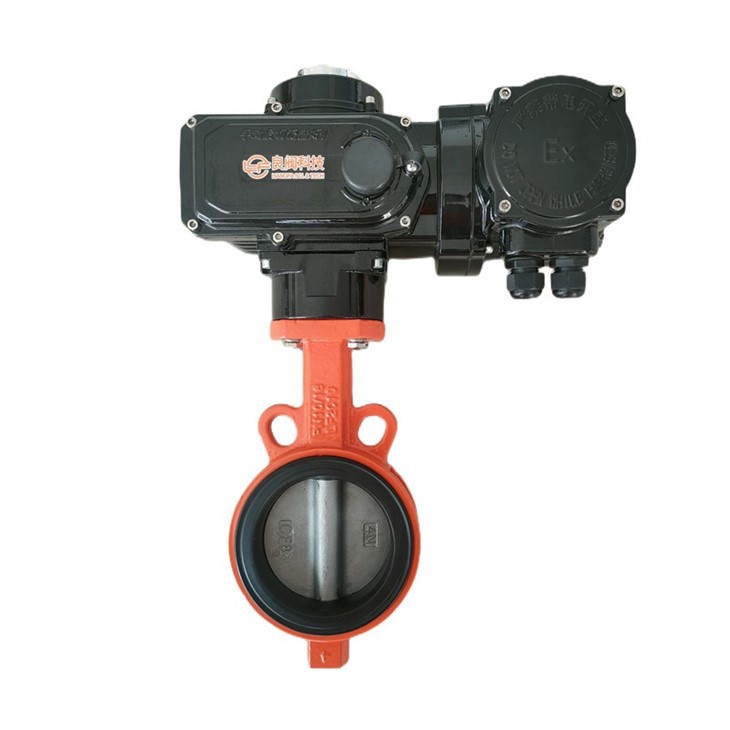
3,Classification by Drive Method (Based on Operation Method)
○Manually operated via a handwheel, handle, or worm gear mechanism. They feature a simple structure and low cost, making them suitable for small-diameter, low-frequency applications (such as small pipeline maintenance and civil valves).
○Powered by an electric actuator (motor-driven gear/turbine), they enable remote control and automated operation, offer high precision (capable of regulating flow), and are suitable for large pipelines and automated systems (such as industrial production lines and municipal water supply systems).
○Powered by a pneumatic actuator (cylinder-driven), they offer fast response (short opening and closing times) and are suitable for flammable and explosive environments (no risk of sparks) or conditions requiring rapid switching (such as emergency shutoff of chemical pipelines).
In addition to the three categories mentioned above, butterfly valves can also be categorized by caliber (small/medium/large) and material (cast iron, stainless steel, etc.). The choice of type in actual application should be based on the media characteristics, pressure and temperature, and operational requirements.


